How it works
- Open 02 Setup. Enter the question in one sentence, the decider, the date, the period and the rates.
- 03 Criteria: write the musts as yes or no questions and the wants with what is measured. Fill the paired comparison above the diagonal.
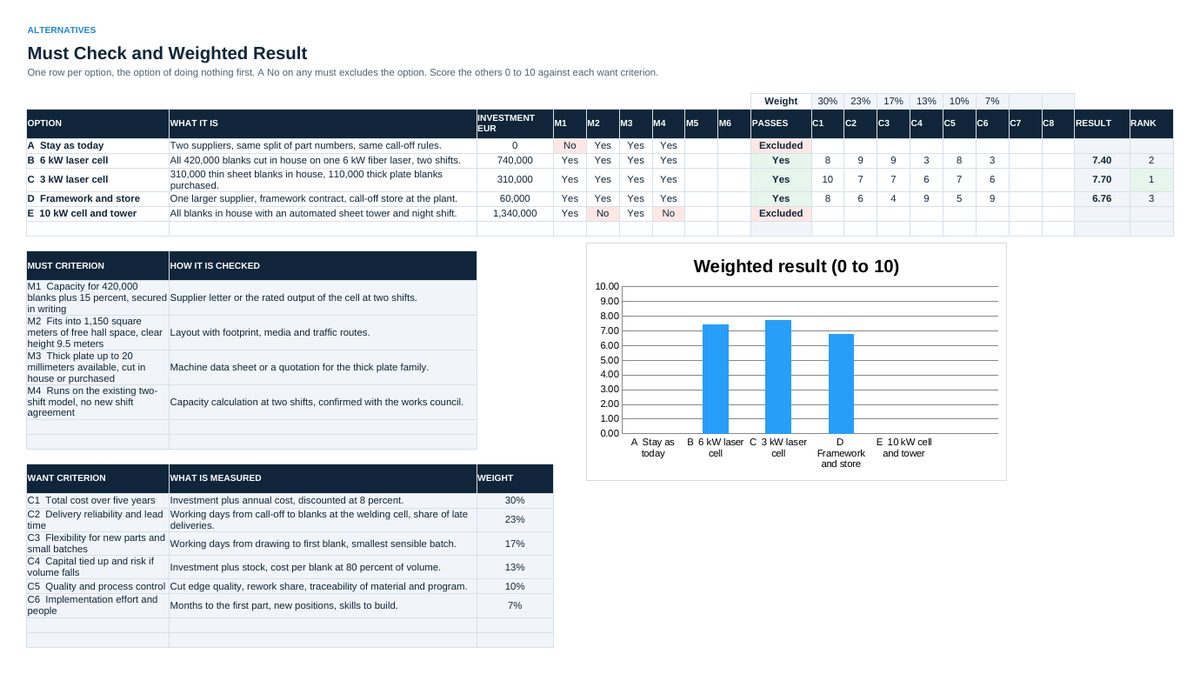
- 04 Alternatives: one row per option, doing nothing first. Answer every must with Yes or No, then score the remaining options 0 to 10.
- 05 Cost and Benefit: enter the drivers per option and compare the two closest options directly.
- Read 06 Status when the decision is presented. Write the decision, the assumptions and the review date into your record.
Definitions used in the workbook
- Must: A criterion that excludes an option. Answered Yes or No with evidence. No weight.
- Want: A criterion that separates the remaining options. Weighted, scored 0 to 10 against a written definition.
- Paired comparison: Each criterion against each other: 2 points if the row matters more, 1 if equal, 0 if the column matters more. Weight = points / total points.
- Weighted result: Sum of weight times score over all want criteria, on a scale of 0 to 10.
- Discounted cost: Investment plus the annual cost of each year, discounted at the rate in 02 Setup.
Sheets in the workbook
- Start
- Setup
- Criteria
- Alternatives
- Cost and Benefit
- Status
Who it is for
Managers and engineers who have to prepare an investment, a make or buy or a supplier decision and want it traceable.
The method behind the numbers
This workbook is part of the Structured Decision Making toolkits. The Starter Kit adds the guide and the checklist for the first 30 days. The Excellence Bundle adds playbook, workshop pack, templates, deck and the complete Excel system.