How it works
- 02 Setup: the site, the size of the program, the hours per audit, the internal rate and the thresholds for the risk classes.
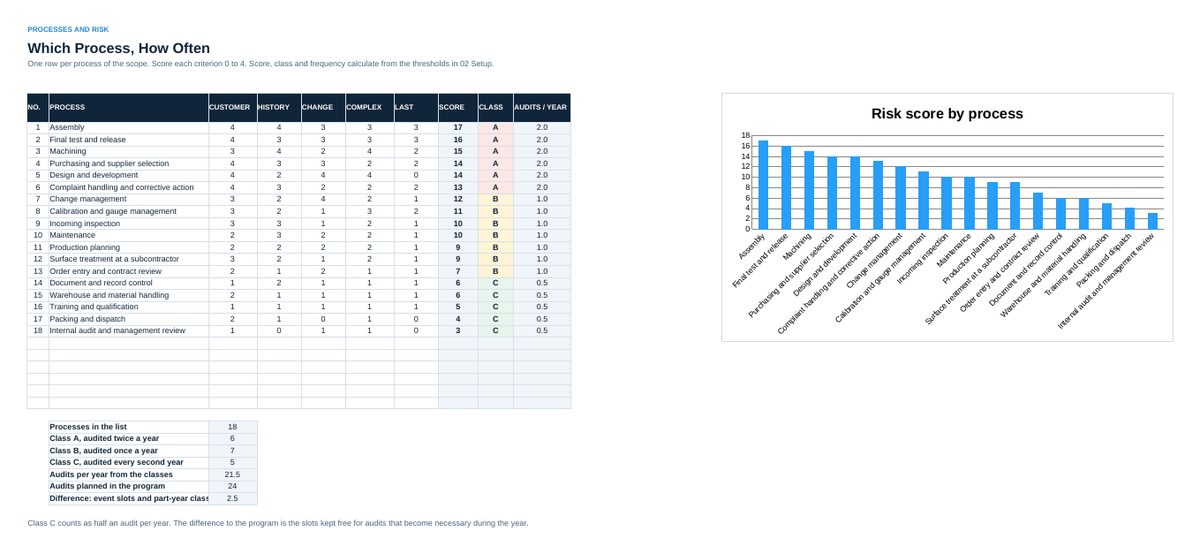
- 03 Processes: one row per process of the scope. Score five criteria from 0 to 4. Class and frequency calculate.
- 04 Program: place every audit in a month, name the lead and the second auditor, check independence.
- After each audit: status Done, the number of findings, and the findings themselves in 05 Findings.
- 06 Status every quarter with the program owner and once a year with management.
Definitions used in the workbook
- Internal audit: A planned, independent comparison between how a process is supposed to work and how it works today, based on evidence.
- Risk score: Customer impact, defect history, change activity, complexity and last audit result, each 0 to 4, added to 0 to 20.
- Nonconformity: A requirement of the criteria is not met, and the evidence shows it.
- Observation: The requirement is met, but the way it is met depends on luck, memory or one person.
- Opportunity: Nothing is wrong. Something could be simpler, faster or safer.
Sheets in the workbook
- Start
- Setup
- Processes
- Program
- Findings
- Status
Who it is for
Quality and operations managers who want an audit program with a reason behind every audit.
The method behind the numbers
This workbook is part of the Internal Audits toolkits. The Starter Kit adds the guide and the checklist for the first 30 days. The Excellence Bundle adds playbook, workshop pack, templates, deck and the complete Excel system.