How it works
- 02 Setup, 03 Spend Data and 04 Spend Cube: the spend by category, supplier and requester with maverick share and contract coverage.
- 05 Portfolio places every category by supply risk and influence. 06 Strategy holds the strategy of one category with levers and targets.
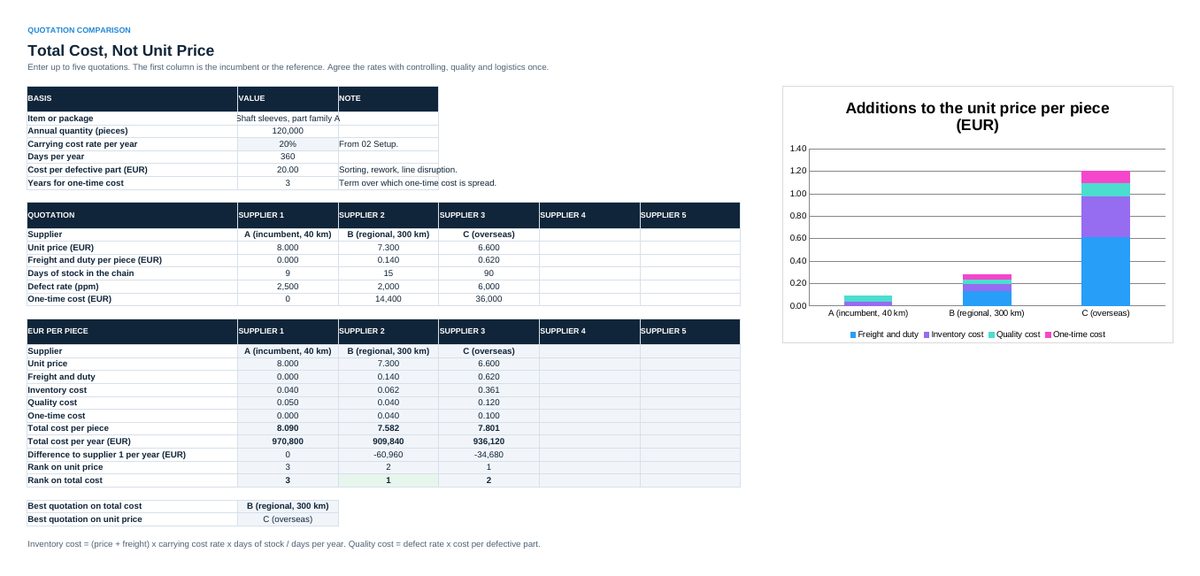
- 07 Quote Comparison compares up to five quotations on total cost. 08 Cost Breakdown compares the quoted price with your estimate and calculates the price formula.
- 09 Make or Buy compares relevant cost and shows the break-even quantity. 10 Contracts holds the register with notice dates and the checkpoints of one contract.
- 11 Savings Tracker lists every measure with annual effect and effect in this year. 12 Key Figures follows seven numbers per quarter.
- 13 Audit every six months. 14 Status every quarter.
Definitions used in the workbook
- Total cost: Unit price plus freight and duty, inventory cost, quality cost and one-time cost per piece.
- Saving: (Old price - new price) x quantity, same specification, twelve months from the first delivery at the new price.
- Cost avoidance: Difference between a first offer or an announced increase and the agreed price. Reported separately.
- Relevant cost: Cost that changes with the decision. Overhead that stays in both cases is left out.
Sheets in the workbook
- Start
- Setup
- Spend Data
- Spend Cube
- Portfolio
- Strategy
- Quote Comparison
- Cost Breakdown
- Make or Buy
- Contracts
- Savings Tracker
- Key Figures
- Audit
- Status
Who it is for
Purchasing managers who steer categories, awards and savings for a whole plant.
The method behind the numbers
This workbook is part of the Strategic Procurement toolkits. The Starter Kit adds the guide and the checklist for the first 30 days. The Excellence Bundle adds playbook, workshop pack, templates, deck and the complete Excel system.