How it works
- 02 Setup: product, quantity, prices, margin and overhead rate. 03 Portfolio: compare your products and choose the object.
- 04 Cost: the cost statement per component. 05 Functions: verb plus noun, type and measure.
- 06 Paired Comparison: importance from the customer point of view. 07 Function Cost: matrix, value index and search fields.
- 08 Ideas: every idea with function, component, saving, one-time cost, customer effect, risk, decision, status and month.
- 09 Requirements: customer requirements, technical characteristics, required and actual values.
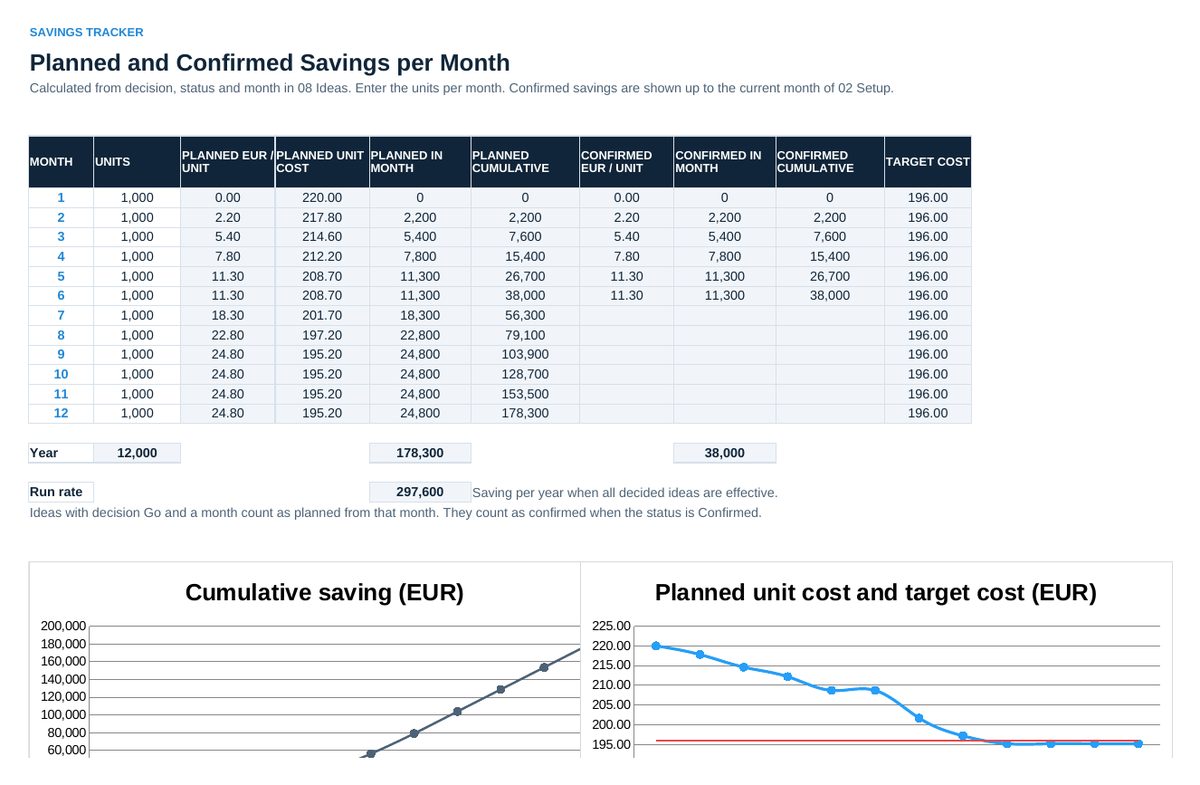
- 10 Target Cost: target per component and the business case. 11 Savings Tracker: planned and confirmed savings per month.
- 12 Audit after every study. 13 Status in every review with the sponsor.
Definitions used in the workbook
- Value index: Importance share / cost share. Below 0.8: search field. Above 1.2: protect.
- Gate: An idea with a minus for the customer on a protected function is rejected, whatever it saves.
- Confirmed: The change is in the bill of material, the routing or the purchase price, first units are built and controlling has confirmed the new cost.
- Direct saving: Full cost saving / (1 + overhead rate). The overhead share becomes cash only when overhead cost falls.
Sheets in the workbook
- Start
- Setup
- Portfolio
- Cost
- Functions
- Paired Comparison
- Function Cost
- Ideas
- Requirements
- Target Cost
- Savings Tracker
- Audit
- Status
Who it is for
Heads of product lines, engineering managers and controllers who have to reach a target cost and prove the saving.
The method behind the numbers
This workbook is part of the Value Analysis and Value Engineering toolkits. The Starter Kit adds the guide and the checklist for the first 30 days. The Excellence Bundle adds playbook, workshop pack, templates, deck and the complete Excel system.