How it works
- 02 Setup: family, demand, shift model, pack quantity, target. 03 Family Matrix: group the products and choose the family.
- 04 Current Data and 05 Current Ladder: data boxes and counted inventory of the current state, with lead time and flow efficiency.
- 06 Takt and Pitch: variant mix in containers and pitches, and the takt time for demand swings.
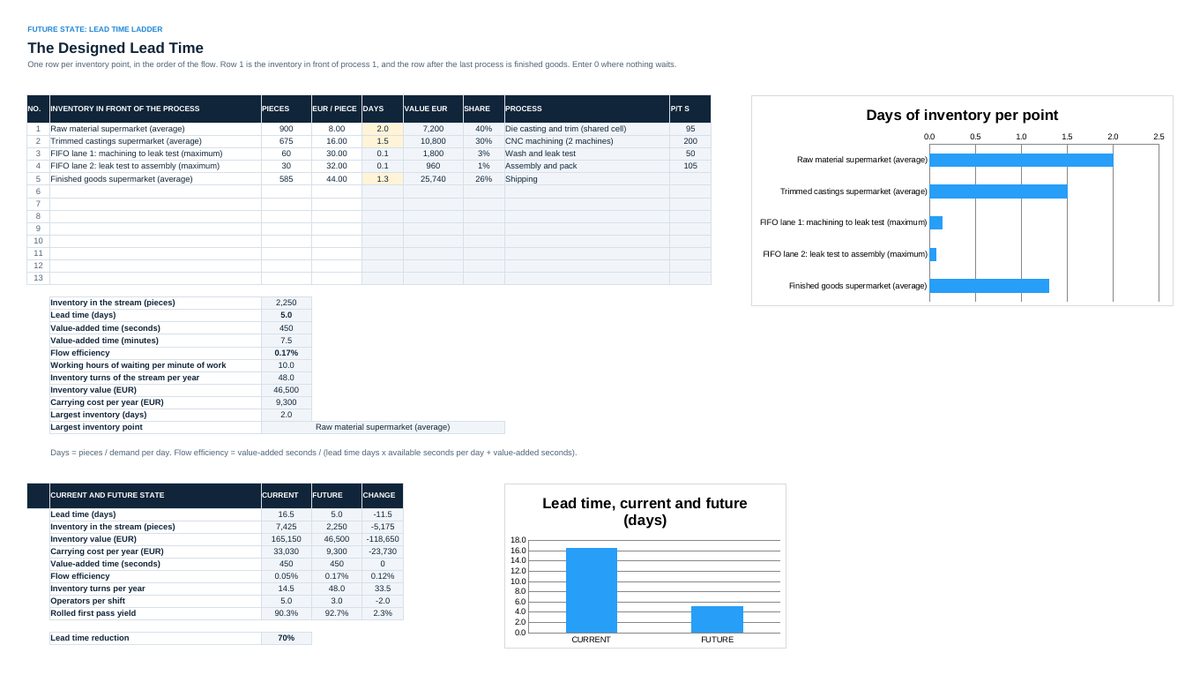
- 07 Supermarkets: size every supermarket and FIFO lane. 08 Future Data and 09 Future Ladder: the designed state and the comparison.
- 10 Loop Plan: actions per loop with owner, date and status. 11 Review: the monthly figures against target and plan.
- 12 Audit every three months. 13 Status in every monthly review.
Definitions used in the workbook
- Pitch: Takt time x pieces per container. The portion in which the pacemaker is released and checked.
- Supermarket maximum: Demand per day x (replenishment interval + buffer + safety). The average uses half the interval.
- Shortest interval: Variants x changeover time / free minutes per day. A planned interval below it cannot work.
Sheets in the workbook
- Start
- Setup
- Family Matrix
- Current Data
- Current Ladder
- Takt and Pitch
- Supermarkets
- Future Data
- Future Ladder
- Loop Plan
- Review
- Audit
- Status
Who it is for
Value stream managers and lean leads who design a future state and steer its loops.
The method behind the numbers
This workbook is part of the Value Stream Mapping toolkits. The Starter Kit adds the guide and the checklist for the first 30 days. The Excellence Bundle adds playbook, workshop pack, templates, deck and the complete Excel system.