How it works
- 02 Setup: demand, working time and targets. 03 Requirements and 04 Summary: the requirement list with criterion, method and stage.
- 05 Bid Check: answers of the suppliers per requirement. 06 Technical Score: criteria, weights and scores from 0 to 4.
- 07 Life Cycle Cost: one-time cost, cost per year, commercial score, overall score and rank.
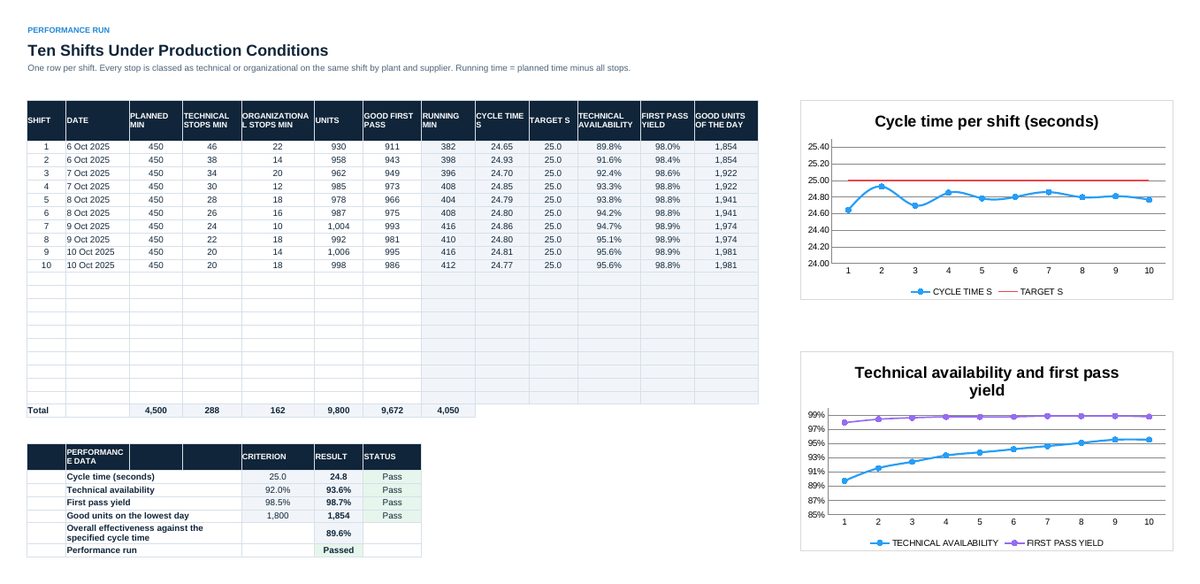
- 08 Test Protocol: result of every test point at design review, FAT, SAT and performance run. 09 Performance Run: the shift log and the four performance data.
- 10 Open Points: every point with class, owner, date and status. 11 Handover: what production and maintenance take over.
- 12 Warranty Log during the warranty period. 13 Audit after every purchase. 14 Status at every project review.
Definitions used in the workbook
- Technical availability: (Planned minutes - technical stops) / planned minutes. Stops for missing material or people are organizational and do not count.
- First pass yield: Good units at first pass / units started.
- Life cycle cost: One-time cost + years of use x cost per year. No discounting.
- Classes of open points: A blocks shipment or the start of production. B is closed before final acceptance. C may be closed later, with a date.
Sheets in the workbook
- Start
- Setup
- Requirements
- Summary
- Bid Check
- Technical Score
- Life Cycle Cost
- Test Protocol
- Performance Run
- Open Points
- Handover
- Warranty Log
- Audit
- Status
Who it is for
Project leads and plant managers who buy equipment and want it to reach its output on the planned date.
The method behind the numbers
This workbook is part of the Equipment Specification and Acceptance toolkits. The Starter Kit adds the guide and the checklist for the first 30 days. The Excellence Bundle adds playbook, workshop pack, templates, deck and the complete Excel system.